


Published on: March 12, 2026

How Productique Québec De-Risks Industrial Additive Manufacturing

Discover how this Sherbrooke-based CCTT helps manufacturers navigate the complex transition from 3D printing concepts to certified industrial production.

For many Canadian manufacturers, the journey into Additive Manufacturing (AM) follows a predictable, and sometimes frustrating, pattern. It starts with excitement: a company purchases a 3D printer, hoping to overhaul their production. But soon, reality hits. The "plug-and-play" promise fades as they encounter warped parts, poor surface finishes, and the realization that a printer is not a factory.

"The issue I’ve consistently seen is that additive often enters a company through an enthusiast approach," says Nicolas Beaudoin, Manager of the Digital Manufacturing Group at Productique Québec. "They hit a wall because they haven’t applied an engineering process to the technology."

This gap between an initial idea and a production-ready part is exactly where Productique Québec lives.

Productique Québec Logo

Located in Sherbrooke and affiliated with the Cégep de Sherbrooke, Productique Québec is a College Centre for the Transfer of Technology (CCTT) specializing in Industry 4.0. Unlike a standard service bureau that simply prints what you send them, their mission is to de-risk innovation. They help partners integrate digital technologies—from AM to IIoT—directly into their value streams to boost productivity.

With a specialized technical team including a PhD-level material scientist and industrial experts, Productique Québec operates on three pillars: applied research, technical assistance, and training. It is a model that allows them to tackle complex industrial problems while simultaneously training the next generation of Canada's workforce.

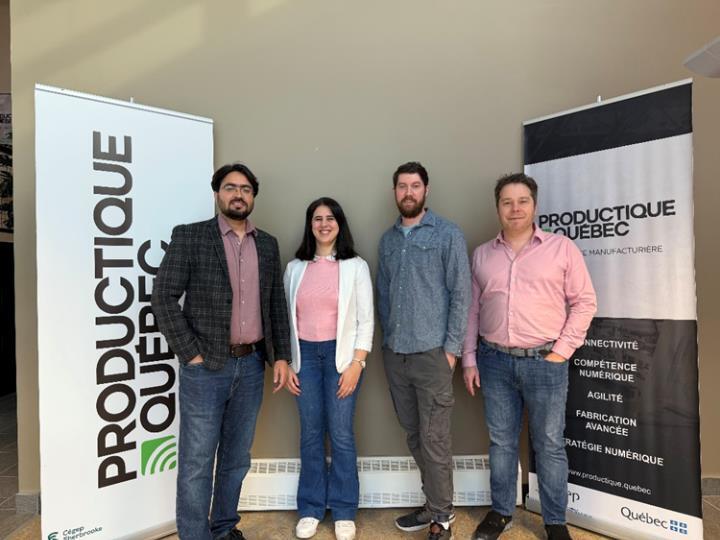
Productique-Québec1 From left to right: Dr Amit Kumar, PhD, Rym Gazzah MSc, Simon Lacroix (IIoT technician), and Nicolas Beaudoin.
Case Study: Solving the "Unprintable" Aerospace Part

Recently, a Canadian partner in the aerospace sector approached Productique Québec with a challenge that perfectly illustrates the "valley of death" in AM adoption. They needed to manufacture a high-stakes component from Inconel 625, a notoriously difficult nickel-based superalloy.

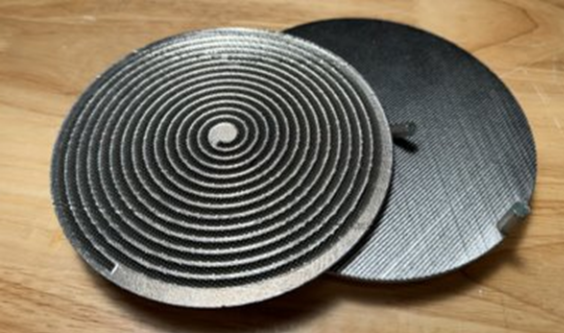
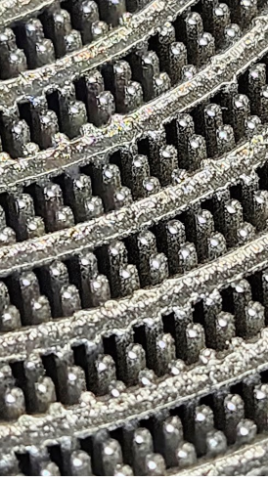
The part was complex: it featured intricate internal channels designed to circulate a phase-changing liquid for critical heat transfer. In earlier proof-of-concepts, the partner found that the internal surface finish was so poor it compromised the fluid flow and the part’s thermal functionality. They arrived at Productique Québec with low expectations, assuming that rough internal surfaces and expensive post-processing were simply the "price of admission" for metal 3D printing.

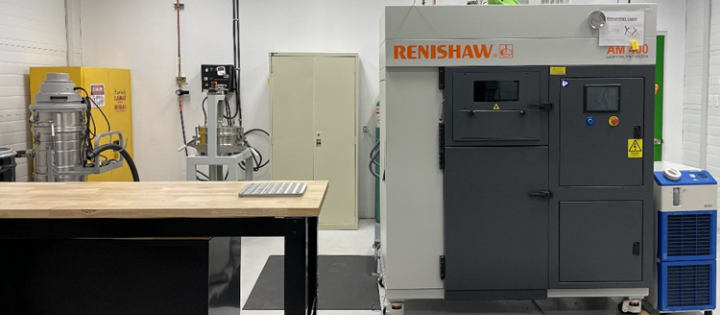
1) Rewriting the Material Recipe The team didn’t rely on the “perfect” settings suggested by machine manufacturers. Dr. Amit Kumar devised a rigorous test plan to characterize the material and push the processing boundaries of their Renishaw AM 400.

Productique Québec2

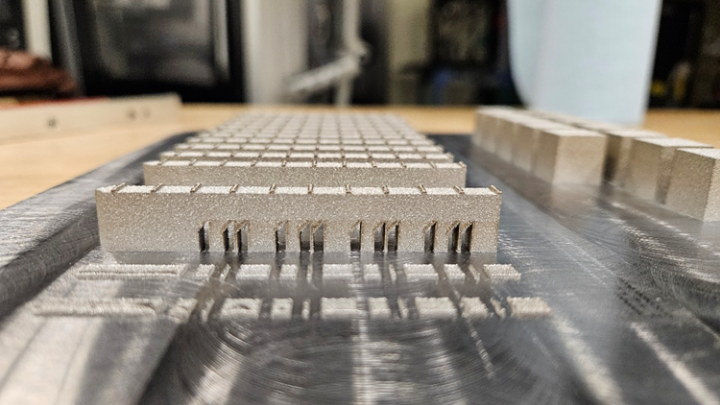
2) Design for Manufacturing (DfAM) Simultaneously, Nicolas Beaudoin worked with the partner to re-engineer the part’s geometry to survive and facilitate the entire manufacturing lifecycle—not just the print bed. The team pushed the limits of support-free printing and achieved high surface quality on low-angle down-skin surfaces.

CNC Finishing
Machine parts

They also integrated physical datums (reference points) into the 3D-printed design, allowing machinists to reposition the part accurately during CNC finishing.

3) Digital VisibilityTo optimize productivity during the build, the team utilized internally developed monitoring tools to instrument the AM system. This provided real-time visibility into the machine’s status and allowed remote monitoring of the build.

They identified a specific parameter recipe that achieved high density and surface finish that exceeded OEM expectations. This protocol is now used as a standard operating practice for new materials.

Training the Future Workforce
One of Productique Québec’s greatest strengths is its connection to education. The complex Inconel project heavily involved a student intern from the Cégep de Sherbrooke.
Mentored by the technical team and teachers, the intern participated in everything from build preparation to operating the metal printer.
"There is a major disconnect in the workforce right now," notes Beaudoin. "Many engineering students still see additive only as rapid prototyping.

"By exposing students to real-world applications—from camping gear to aerospace components—Productique Québec is helping ensure Canada’s manufacturing sector has the skilled talent needed to compete globally.

De-risking the FutureWhether through funding programs or connecting legacy machines to the Industrial Internet of Things (IIoT), Productique Québec continues to support Canadian SMEs.

To learn more about Productique Québec, visit: www.productique.quebec

Drug-eluting additively manufactured materials and medical devices

Drug-Eluting Additively Manufactured Materials & Devices

Canada Makes Trade missions are about opening doors, gaining insights, business-to business contacts, information and tools for Canadian businesses, especially small and medium-sized enterprises (SMEs).

The Five-day fact-finding mission focused on additive manufacturing (AM) and offered the opportunity for attendees to meet with leading additive manufacturing companies and experts.

Read More »
canada makes special report

Canada Makes // Special Report from Formnext 2022

Canada Makes Trade missions are about opening doors, gaining insights, business-to business contacts, information and tools for Canadian businesses, especially small and medium-sized enterprises (SMEs).

The Five-day fact-finding mission focused on additive manufacturing (AM) and offered the opportunity for attendees to meet with leading additive manufacturing companies and experts.

Read More »
Seaspan Logo

Seaspan Joins the Mission

Canada Makes is pleased to welcome Seaspan as an active member of our national additive manufacturing ecosystem. Seaspan is a leader in Canada’s ship design, engineering, construction, and repair industry, boasting modern facilities in North Vancouver and Victoria. The company delivers complex projects for government and private-sector customers and plays a key role in Canada’s marine programs.

Read More »